Life on Earth

Life on Earth |
|
|
| Home | Stars | Orbits | Habitability | Life | | |||
| | Venus? | Mars? | Europa? | Elsewhere? | Earth | Alien Plants | |
NASA -- larger image
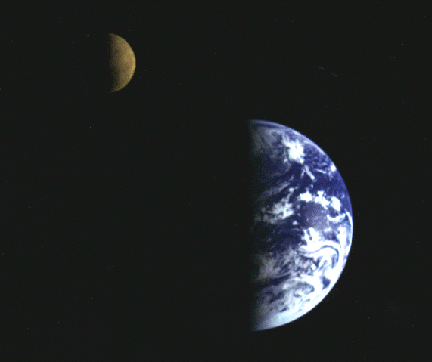
Most known Earth-type life depends on six essential elements (carbon, hydrogen, oxygen, nitrogen, sulfur, and phosphorus) and the presence of liquid water, which is often described as simply carbon-based life. Is carbon-based life likely to develop soon after a hospitable inner rocky planet or moon forms around a star like our Sun, Sol? Can such life survive and flourish in extremely hot and cold temperatures, or in oxygen poor and carbon dioxide or methane rich environments? How long did it take before large plants and animals evolved on Earth and adapted to life on land? What can be observed as signs of carbon-based life on distant planets? Potential guides to the development of carbon-based life on other planets in the Solar System or around other stars include the past history and continuously changing nature and types of life and environmental conditions on Earth that reflect life's presence.
History of Life on Earth
The following chronology describes important stages in the development of carbon-based life on Earth, beginning with the birth of the Solar System about 4.6 billion years ago.
Years 0.0 to 0.1 Billion
Within the first 100 million years of Sol's birth, protoplanets agglomerated from a circum-Solar disk of dust and gas. Not long after, the protoplanetary Earth was struck by a Mars-sized body ("Theia") to form the Earth and Moon
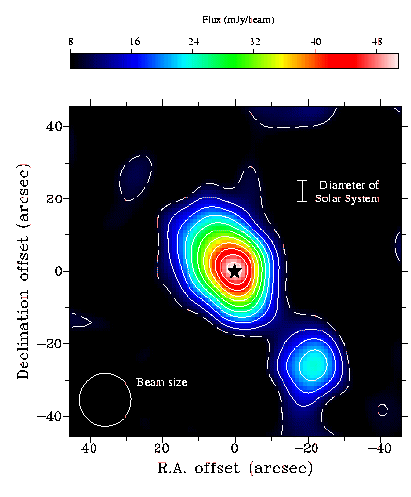
Submillimetre
Common-User Bolometer Array, James Clerk Maxwell Telescope, JAC
(As around Beta Pictoris, a cold
dust disk once girdled Sol)
Although Earth developed life based on carbon-rich molecules, the planet is surprisingly deficient in carbon relative to the Sun and the outer Solar System, where carbon is thousands of times more abundant in comets relative to the amount of silicon that each icy body contains. In the inner region of the dust disk where Earth formed, the temperature should not have been hot enough to vaporize carbon dust, according to recent observations of circumstellar debris disks around newborn stars. On the other hand, oxygen atoms in the dusty disk that would have been heated by stellar accretion within 5 AUs of the Sun could have quickly combined with primordial carbon grains. The oxygen would have "burned up" the carbon to produce gases such as carbon dioxide and monoxide, which would have moved into the outer disk along with water vapor before chilling into ices, so that any solid carbon in the inner solar system would have been destroyed within a few years. Asteroids and comets that formed in the outer disk beyond the carbon-oxygen fire must have brought what carbon (along with water) that Earth now has in large as well as very small impactors ("cosmic fluff," Duprat et al, 2010) over the past 4.6 billion years. Moreover, chemical reactions in the outer disk may have transformed simple carbon compounds into more complex molecules essential to Earth-type life, such as amino acids (Lee et al, 2010; and David Shiga, New Scientist, January 19, 2010).

Pat Rawlings, NASA
Larger image
Unlike the case for carbon, the outer Solar System can only have provided as much as 10 percent of the surface water found on Earth given the lower proportion of deuterium found in Earth's water. Rocky ("terrestrial") planets like the Earth are thought to develop within the relatively hotter, inner region of a circumstellar dusk disk around their host star. These planets form with a hot silicate mantle around a metallic core. Mathematical modelling indicates that planets with one to three percent water content should exude water onto its surface as its mantle cools (where this planetary "magma ocean" solidifies from the bottom up). With a water content of just 0.01 percent, on the other hand, a rocky planet similar to the Earth in elemental composition should outgas enough steam into the atmosphere to fall out as rain to form seas, if not oceans, of water as the planet cools within the first tens of million years after formation. Under this model of ocean formation, rocky planets with 0.5 to five Earth-masses are likely to form oceans within the first 150 million years after formation. In the Solar System, however, only the Earth was large and lucky enough to have sufficient mass to gravitationally hold on to its vast oceans of water within the star's warm "habitable zone" for over four billion years and foster the development of its Earth-type life (Linda T. Elkins-Tanton, 2010; and Steve Nerlich, Universe Today, November 20, 2010 -- also in Astrobiology, March 4, 2011).
 NASA
NASA
Larger image.
Rocky ("terrestrial") planets like the
Earth with
a silicate mantle around a metallic core should
exude water from their cooling mantle (a "magma
ocean" that solidifies from the bottom up) and
even more by outgassing steam which falls back
to the surface to form seas and oceans of water,
as the planet cools within the first 150 million
years after formation
(more).
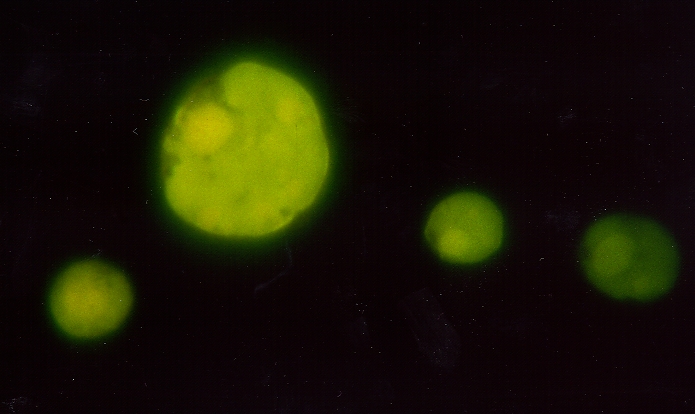
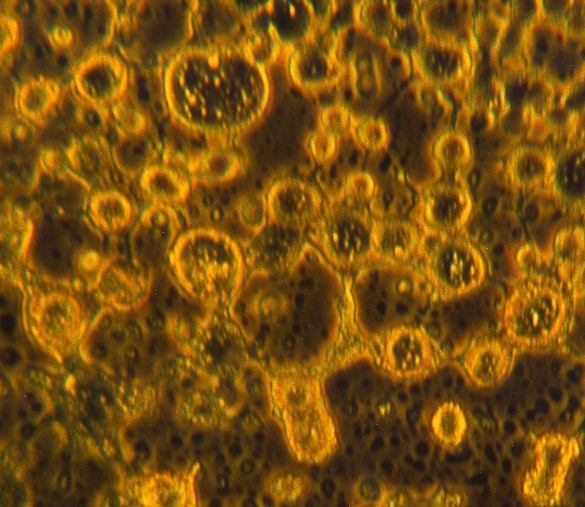
Some scientists now believe that comets, meteorites, and interplanetary dust deliver organic compounds created in interstellar space to newly formed planets, and that such space-born substances could have "kick-started" the development of life on Earth. Researchers working with NASA's Astrobiology Institute have created "proto-cells" that mimic the membranous structures used to create the living cells found on our planet. They subjected icy dust particles that are rich in organic compounds (i.e., water, methanol or wood alcohol, ammonia, and carbon monoxide) that are found in dense molecular clouds of interstellar space to the harsh conditions found there, such as intense cold and ultraviolet light. An abundance of such structures raining down on wet areas of Earth during its early years could have been important in protecting self-replicating molecules (i.e., the precursors of RNA and DNA, or an "initial Darwinian ancestor": Catherine Brahic, New Scientist, April 21, 2010) that became encapsulated within them, and eventually such proto-cells could have evolved into primitive lifeforms. (See a NASA summary.) In 2006, two scientists argued that the development of life on Earth was the necessary consequence of available energy built up by geological processes (including polyphosphates made in volcanic processes) on the early Earth, in the same way that lightning relieves the accumulation of electrical charge in thunderclouds (Morowitz and Smith, 2006; and Phillip Ball, Nature, November 14, 2006).
NASA
Astrobiology
Institute -- larger and
detailed images
Ionizing radiation such as ultraviolet light "processes" substances
found in the cold molecular clouds of interstellar space such as
ices rich in organic compounds into even more complex organic
materials. When these processed "residues" are placed in water,
one or more of the compounds present spontaneously form
membranes that produce "proto-cells" ("vesicles").
Years 0.1 to 0.8 Billion
Initially, the Earth's surface was mostly molten rock that gradually cooled through the radiation of heat into space. The primeval atmosphere was composed mostly of water (H2O), carbon dioxide (CO2) and monoxide (CO), molecular nitrogen (N2) and molecular hydrogen (H2), and hydrogen chloride (HCl) outgassed from molten rock, with only traces of reactive molecular oxygen (O2). This steamy atmosphere was rich with water released from hydrated minerals and cometary impactors (David Shiga, New Scientist, November 5, 2010; and de Leeuw et al, 2010). As the Earth continued to cool from Years 0.1 to 0.3 billion, a torrential rain fell that turned to steam upon hitting the still hot surface, then superheated water, and finally collected into hot or warm seas and oceans above and around cooling crustal rock leaving sediments. Every once in a while, however, a large asteroid or comet would strike the planet which remelted crustal rock and turned oceans back into hot mist. Eventually, a stable rocky crust may have developed between Years 0.2 and 0.4 billion (see J. Bret Bennington's discussion of recycled zircons (crystals of zirconium silicate) from the rocks of western Australia in the Hadean Eon and the January 11, 2001 announcement of zircons found north of Perth that appear to be 4.4 billion years old), covered and surrounded by soupy water that was already rich with organic compounds from interstellar space.
 John
W. Valley,
NSF
John
W. Valley,
NSF
Larger, annotated
cathodoluminescence image.
The oldest fragment of Earth's primeval crust is a zircon
dated to be 4.4 billion years old, having formed less
than 160 million years after planetary formation
(more).
On July 3, 2008, a team of scientists published results (Nemchin et al, 2008) on finding unusually high "light-carbon" isotope ratios possibly indicative of biological origin found in micrometer-sized diamond and graphite inclusions that were later incorporated within 22 zircons from the Jack Hills of Western Australia, which were formed under the pressure of 100 to 150 kilometers (62 to 93 miles) of crustal rock. As the zircons were radioactively dated to be as old as 4.25 billion years, the new findings suggest that carbon-based life may have been present on Earth within the first 300 million years after planetary formation, possibly as a "planetary mega-organism" in Earth's oceans (Michael Marshall, New Scientist, November 25, 2011). The ratios of Carbon-12 to Carbon-13 found within the zircons were unusually high, where such high abundances of Carbon-12 are commonly attributed to the presence of organic material created by Earth life. Although some non-biological chemical reactions can create such high light-carbon ratios (McCollom and Seeward, 2006), those found were so skewed towards Carbon-12 that it's unclear exactly how such reactions could have created such abundances. Alternatively, some hypothesize that the reservoir of light carbon on the early Earth indicates the presence of simple organic compounds -- possibly brought by asteroidal or cometary impactors -- that created a hospitable environment for the later emergence of life (more discussion in Rachel Courtland, New Scientist, July 2, 2008; Sid Perkins, Science News, July 2, 2008; and Jonathan Fildes, BBC News, July 2, 2008). More recently, however, microbial life found around hydrothermal vent ecosystems (i.e., the "Lost City" found in the Mid-Atlantic Ridge, which is cooler than those found at "black smokers") indicate that Carbon-13 is not selected against Carbon-12 in hydrogen-rich environments where microbial life is starved of carbon, essentially in the form of carbon dioxide (Alexander S. Bradley, Scientific American, December 2009: pp. 62-67).

NASA
Larger image.
Earth was under intense bombardment from
cometary and asteroidal impactors, like
stoney asteroid
951
Gaspra,
during the first
700 million years after formation.
Despite comparatively intense bombardment by large impactors, chemical and radio-isotopic trace evidence of what appears to be biologically processed carbon in Earth's oldest surviving rocks -- from western Greenland's Isua greenstone belt that are as old as 3.85 billion years -- suggest that self-replicating, carbon-based microbial life became well developed during Earth's first billion years of existence. Although the evidence was subsequently contested, some single-celled microbial life lacking a nucleus that segregates their internal DNA or RNA ("prokaryotes") from the surrounding cytoplasm may have flourished in darkness within cracks in Earth's seafloor crust and around deep, warm or boiling hot ocean springs (hydrothermal or volcanic vents, such as at Lost City or at black smokers) without a need for light or free oxygen in the oceans or atmosphere. [Based on the relative concentrations of salts such as potassium and sodium in the cytoplasm of all biological cells and questions regarding the formation of their fatty-acid membranes, however, scientists have also theorized that life began in hot springs on land rather in the oceans (Mulkidjanian et al, 2012; and Colin Barras, New Scientist, March 10, 2012.)] Adapted to their very hot but watery environment, these microbes metabolized hydrogen-rich compounds or dead or live organic materials to derive the energy that sustains anaerobic life, including sulfate-reducing bacteria that produce Hydrogen Sulfide (H2S), fermentative bacteria that produce carbon dioxide and alcohol (-OH), and methanogenic bacteria -- the methanogens found in sewage and mudflats today -- that produce methane (CH4) gas as a waste product.
 NSF,
U. Washington
NSF,
U. Washington
Larger image.
Recent research indicates that early
life may have first developed in
hydrogen-rich environments around
warm ocean vents (such as those
at the "Lost City"
of the Mid-Atlantic
Ridge) to be hospitable.
Although the early Earth was mostly devoid of molecular oxygen, high volcanic activity released significant amounts of molecular hydrogen. With little oxygen available to convert that hydrogen into water, hydrogen gas probably accumulated in the atmosphere and oceans in concentrations as high as hundreds to thousands of parts per million. Thus, the early Earth was likely a paradise for methanogens that feed directly on hydrogen and carbon dioxide, at least until the atmospheric hydrogen was depleted. On the other hand, many anaerobic microbes including methanogens are easily poisoned by oxygen, and the recent discovery of banded sediments with rusted iron on Akilia Island in West Greenland suggests that oxygen-producing, photosynthetic microbes (e.g., cyanobacteria) living on the surface of wet areas to gather sunlight may have developed by the end of this geologic period (3.85 billion years ago) despite continuing bombardment from space. As proposed by Andrew Goldsworthy in 1987, cyanobacteria and later chloroplast-related protists and plants developed after microbes that used a purple pigment bacteriorhodopsin that absorbs green light dominated the oceans, and so the new photosynthetic cyanobacteria were forced to use the left-over light with chlorophyll that reflects green light, which was too complex to change even after purple-reflecting photosynthetic lifeforms were no longer dominant (Debora MacKenzie, New Scientist, September 10, 2010 -- more on the evolution of photosynthetic life and plants on Earth).

Dudley Foster,
U.S. Geological Survey --
NASA smoker image
("Black smoker" discovered in East Pacific by submersible Alvin)
Years 0.8 to 2.1 Billion
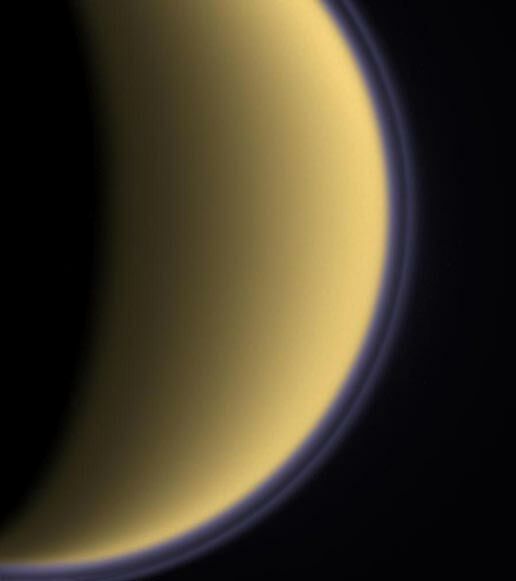
Diminishment of cometary and meteoric bombardment allowed anaerobic microbes to spread widely in wet habitats. Life diversified and adapted to new biotic niches -- some on land -- but stayed single-celled. Some scientists now believe that anaerobic methanogens began to prosper and eventually filled Earth's atmosphere with nearly 600 times as much methane as they do today. That extra methane would have produced a greenhouse effect strong enough to heat the planet to a higher average temperature than it is today, although the Sun was around 20 percent dimmer at that time (Pavlov et al, 2000). The higher temperatures also led to more humid conditions made possible by a more active water cycle, resulting in a climate that is preferred by many methanogens. The more active water cycle, however, also enhanced the weathering of rocks on early continents which should have pulled enough carbon dioxide out of the atmosphere that its concentration would have fallen until the gas existed in nearly equal amounts with methane. Fortunately, some of the methane tends to form complex hydrocarbons that condensed into dustlike particles to produce a high-altitude haze which absorbed and reradiated incoming sunlight back into space to act as a break on greenhouse heating (James F. Kasting, Scientific American, July 2004). Geochemical analysis of ocean sediments from the 2.65-to–to-2.5-billion-year-old Ghaap Group in South Africa suggest that this hydrocarbon haze may have been thick enough to block enough sunlight to delay the oxygenation of Earth's atmosphere by photosynthesizing microbes, and the atmosphere may have even cycled back and forth between methane- and oxygen-rich states for millions of years (Sara Reardon, New Scientist, March 19, 2012; and Zerkle et al, 2012).
 Cassini Imaging Team,
SSI,
JPL,
ESA,
NASA
Cassini Imaging Team,
SSI,
JPL,
ESA,
NASA
Larger and
jumbo false-color
ultraviolet images.
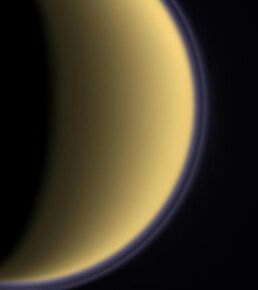
Earth may have had a warmer version of
Titan's
hazy methane-rich atmosphere some 2.4 to 2.5
billion years ago, as seen from the
Cassini and
Voyager probes
(more at APOD from
Cassini
and
Voyager).
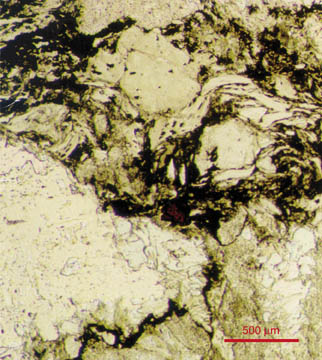
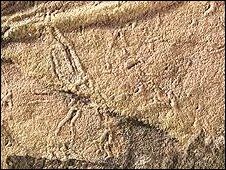
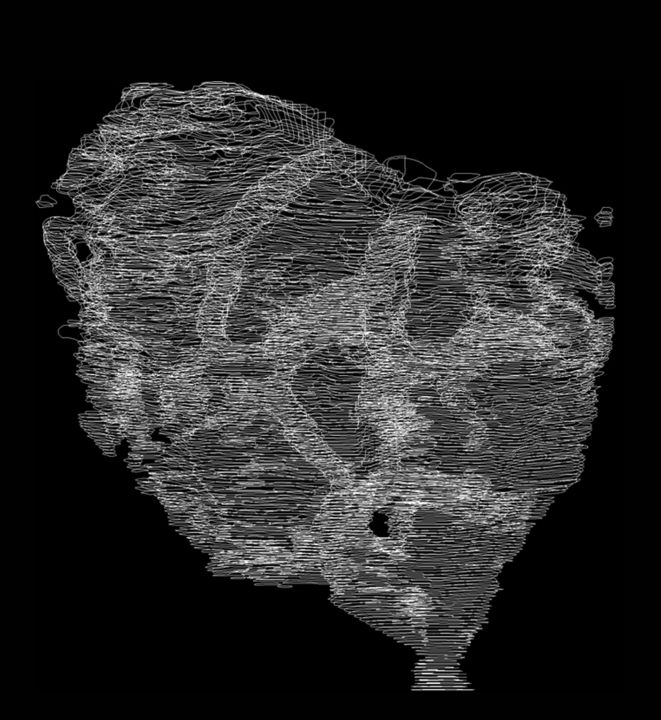
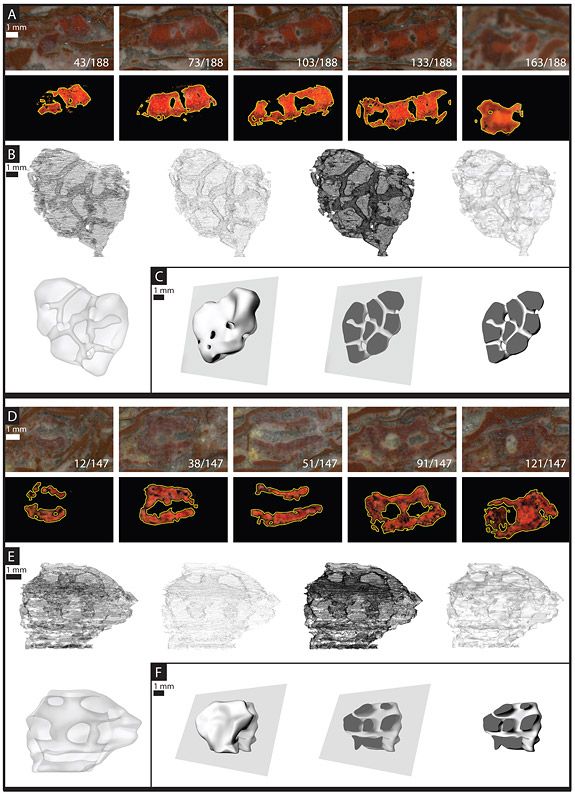
While microbially induced sedimentary structures formed from bacterial mats 3.48 billion years ago were found in Western Australia by 2013 (Carnegie press release), the oldest "trace fossils" (shapes and textures) created by ancient "rock-eating" bacteria are mineralized, micrometer pits and tunnels etched into what was then undersea volcanic glass. This trace evidence of ancient microbial activity was found in pillow lavas at least 3.47 to 3.45 billion years old from the Barberton Greenstone Belt of South Africa. Radioactive dating of the uranium and lead found in the minerals (and organic carbon and light isotope carbon (C13) in bulk-rock carbonates) within the trace fossils that bacteria etched into the glass around 3.342 +/- 0.068 billion years ago (Jonathan Amos, BBC News, October 12, 2010; Fliegel et al, 2010; Grosch et al, 2009; and Furnes et al, 2004). )
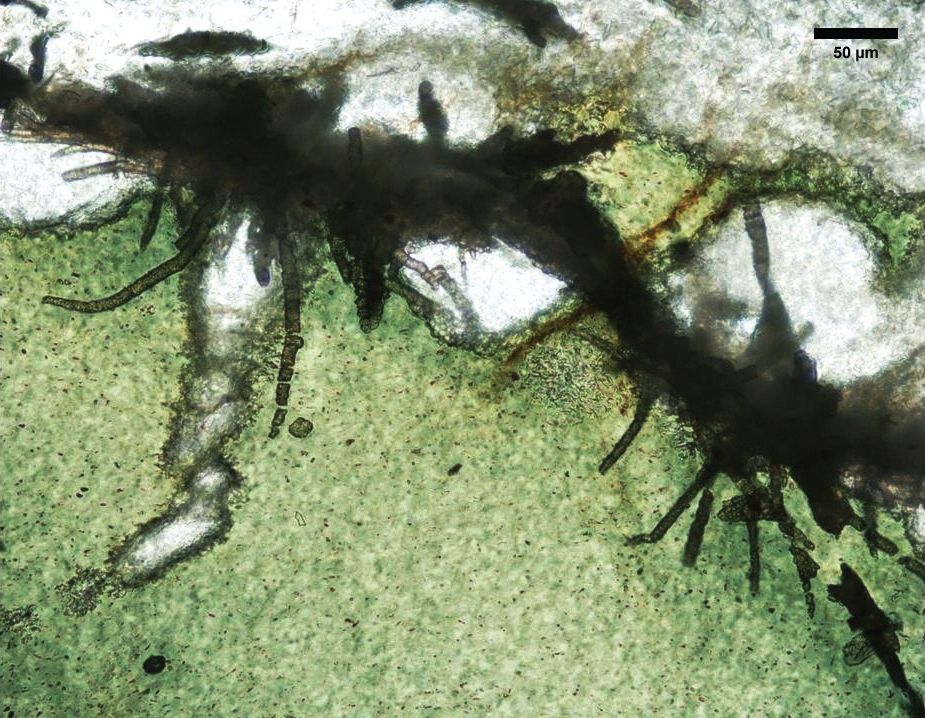 Grosch
et al, 2009
Grosch
et al, 2009
Larger image.
Oldest known, bacterial "trace fossils"
found as mineralized tubes with organic
residues in undersea volcanic glass 3.34
billion years old, which were etched by
"rock-eating" bacteria along cracks
(more).
On August 21, 2011, a team of scientists published an article claiming to have found the earliest microfossils of possibly sulfur-metabolizing bacteria ever found. Dated to 3.43 billion years ago in sandstone from the Strelley Pool Formation in Western Australia, the microstructures were found with micrometer-sized pyrite crystals (fool's gold, an iron-sulfur mineral), as would be expected as the metabolic by-products of sulfur-based life that employ "sulphate-reduction and sulphur-disproportionation pathways." In addition, at least four of the essential elements of life on Earth (carbon, sulfur, nitrogen and phosphorus) were detected within apparent cell walls. The fossils are found as "spheroidal and ellipsoidal cells with tubular sheaths" that demonstrate "the organization of multiple cells" and "are about 200 million years older than previously described6 microfossils from Palaeoarchaean siliciclastic environments." Some scientists believe that rocks older than 3.5 billion years have been too "thoroughly cooked as to destroy all cellular structures," although (as mentioned previously) bio-chemical traces of life have been detected with decreasing certainty in rocks up to 3.5 billion years old in the Dresser Formation of Western Australia and, with less certainty, in rocks 3.8 billion years old in Greenland (Wacey et al, 2011; University of Oxford press release; Nicholas Wade, New York TImes, August 21, 2011; John O'Donoghue, New Scientist, August 21, 2011; and Jonathan Amos, BBC News, August 22, 2011).
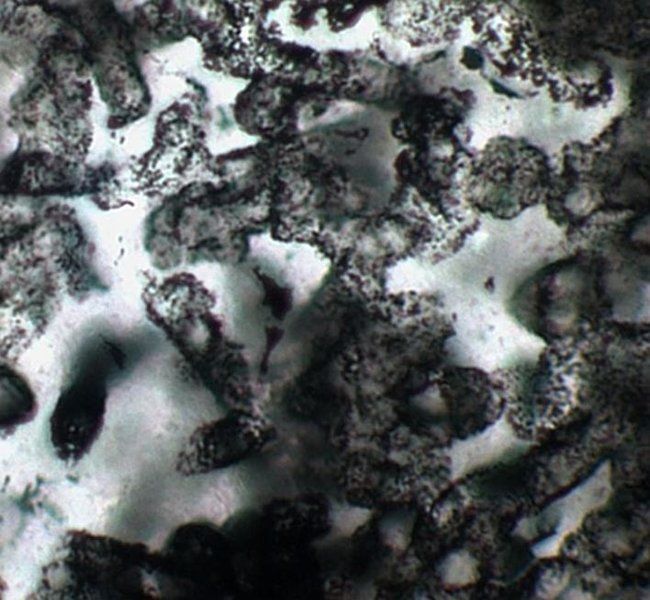 David Wacey
Larger image.
The oldest known, microfossils of apparent
sulfur-metabolizing bacteria were found in
sandstone from an ancient beach that was
dated back to around 3.43 billion years
old, and some structures even appear to
be dividing
(more).
Before Year 1.9 billion, there may have been a surge in the number of magma plumes which removed a large amount of heat from Earth's core. Under the resulting cooler conditions, more oceanic crust would have been created relative to continental crust, which contains less of the nickel that ocean-dwelling, methanogic bacteria need in seawater to convert food into energy and methane. Consequently, the methanogens generated less methane as they were starved by the end of this period around Year 2.1 billion. As less methane was available to to remove oxygen from the atmosphere, however, the result was a build up of oxygen over time during the subsequent "Great Oxygenation Event" (or "Great Oxidation Event") between Years 2.2 and 2.3 billion (Devin Powell, New Scientist, January 12, 2009; 2007 NASA press release; and Anbar el al, 2007).
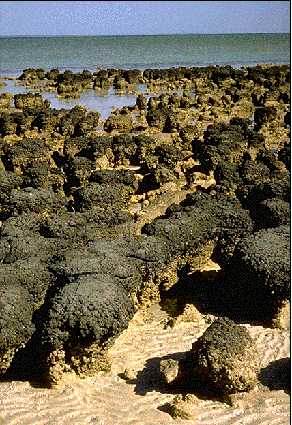
 Cyanosite
-- NASA image of Chroococcidiopsis
Cyanosite
-- NASA image of Chroococcidiopsis
Dividing
Chroococcus
sp., a type of
cyanobacteria,
photosynthetic microbes that also produce oxygen.
While "primitive,"
Chroococcidiopsis
survives in
extremely dry, cold, and salty environments.
By Year 1.1 billion, deep-sea hematite-bearing rock found in the Marble Bar chert formation of northwestern Australia indicates that iron-rich water gushed from volcanically heated seafloor vents were able to mix with cooler oxygen-rich seawater (Ohmoto et al, Nature Geoscience, March 15, 2009; PSU press release, and in EurkaAlert; and Sid Perkins, ScienceNews, April 11, 2009). The finding suggests that microbes with the ability to produce oxygen were prolific at least locally around 3.46 billion years ago, releasing large quantities of this reactive molecular gas into the oceans and eventually the atmosphere by the end of this period (more). Many of these microbes persist today; for example, blue-green (cyanobacteria) or bright green, photosynthetic bacteria use light from the Sun and chlorophyll to convert carbon dioxide and water into "free" molecular oxygen and carbon, made into essential organic substances such as carbohydrates. Other bacteria use bacteriochlorophyll and other photosynthetic proteins to convert light to metabolic energy.
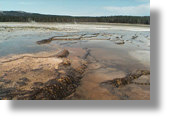 NASA
Astrobiology
Institute and Penn State
NASA
Astrobiology
Institute and Penn State
Astrobiology Research Center (PSARC)
Hot spring
microbial
mats at Yellowstone
National Park, USA. (See image of 2.6
billion-year-old
fossilized remnant.
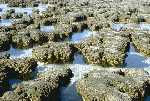
Bacteria formed microbial mats on land as early as three billion years ago. Fossilized remnants and other biochemical evidence from South Africa suggest that photosynthetic bacteria (primarily blue-green cyanobacteria, that may have included the ancestors of Chroococcidiopsis) may have colonized the wet surface of clay-rich soil during rainy seasons, but were blanketed by aerosol deposits laid down during subsequent dry seasons. Such mats may have formed in surface pools, water edges, and other wet spots on land (Press briefs from the NASA Astrobiology Institute of 2/5/01 and 11/29/00, and from the University of Pennsylvania). In May 2009, scientists announced fossil evidence of complex microbial communities thrived on land in small sub-surface cavities near the surface that offered protection from the Sun's ultraviolet rays as early as Year 1.8 billion, or 2.75 billion years ago (Jeff Hecht, New Scientist, May 11, 2009).
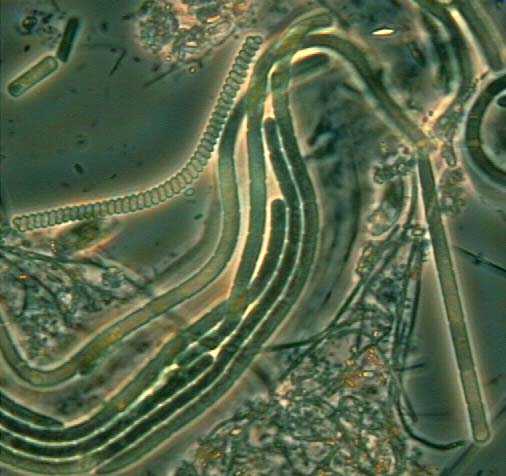 Cyanosite and
PSARC
-- larger modern and
fossilized images
Cyanosite and
PSARC
-- larger modern and
fossilized images
Mix of cyanobacteria from a microbial mat that includes several
filamentous forms, which can also form layered, sediment-clogged
structures called stromatolites
-- larger low-tide field image.
Molecular fossils (steranes) of biological lipids (fats from cell membranes) characteristic of eukaryotic organisms that were probably still singled-celled were thought to have been found preserved in 2.7-billion-year-old shales from the Pilbara Craton, Australia. However, they were later found to have been the contaminants of oil from a more recent era (Rasmussen et al, 2008). Unlike the prokaryotic bacteria (and archaea), the more complex eukaryotes have a nucleus and other organelles within the cell and so are also bigger. If some eukaryotes had developed by Year 1.9 billion, these would have been ancestors of modern, integrated multi-cellular lifeforms from seaweeds and worms to trees and humans (as discussed below). While not as common as hopanes (the biomarkers of prokaryotes), the trace eukaryotic hydrocarbon biomarkers purportedly found in the Archean shales would have pushed back their geological presence by 500 million to 1 billion years before their known fossil record (Brocks et al, 1999; and Burlingame et al, 1965). In any case, new evidence from South Africa for the start-up of an unstable nitrogen cycle and of oxidative chromium weathering) indicate that oxygen-producing microbes (most likely cyanobacteria) had produced some little free oxygen by around 2.7 to 2.8 billion ago in the late Archean, but that low "levels of biologically available nitrogen imited the growth of oxygen-producing plankton, delaying the accumulation of oxygen in the atmosphere" (Godfrey and Falkowski, 2009; and Frei et al, 2009).
Until 2.5 billion years ago, dry land on the Earth's surface was was very scarce and may have covered as little as two to three percent of its surface. Today, some 28 percent of Earth's surface is above sea level. However, calculations by a team of geoscientist (including Nicolas Flament) suggest that Earth was a "water-world" up through year 2.1 billion because Earth's mantle layer may have been up to 200 °C hotter than it is today, when the early Earth still had a larger quantity of radioactive elements decaying and producing heat. This hotter mantle would have made the crust beneath the oceans hotter and thicker than it is today, buoying it up relative to the continents, and the associated shallower ocean basins would have held less water, leading to the flooding of much of what is now land. Such a hot mantle would also have the continental crust to spread more laterally, making the planet's continents lower-lying and flatter than today and more vulnerable to being flooded by shallow seas (David Shiga, New Scientist, December 30, 2008).
Years 2.1 to 2.6 Billion
Just before this period, some anaerobes mutated to become "aerobic" purple bacteria (proteobacteria) that metabolize molecular oxygen and substances produced by life such as carbohydrates into carbon dioxide and water. Many microbes eventually merged into symbiosis with other microbial types (e.g., acid and heat lovers, swimmers, and producers and breathers of oxygen as well as hydrogen and methane). This was accomplished through ingestion without digestion.
 Dinovaro
et al, 2010
Dinovaro
et al, 2010
Alternate image.
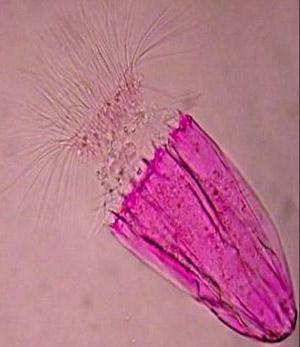
Some microbes merged with
hydrogen-producing microbes (probably
multi-functional
ancestral mitochondria)
to become eukaryotes that later
developed into multi-cellular "animals"
that survive and breed in anoxic
conditions, without oxygen (phylum
Loricifera,
which includes
Spinoloricus
at left --
more).
First, some microbes developed a nucleus using cellular membranes to contain their DNA ("eukaryotes"), perhaps through endosymbiosis. Then, some heat and acid resistant archaebacterium (e.g., Thermoplasma) may have merged with free-swimming spirochete-type bacteria, which became flagella or cilia, on a now, free-swimming protist that is easily poisoned by oxygen. Around two billion years ago, however, some of these protists merged with oxygen-using (and apparently also hydrogen-producing) bacteria, which became multi-functional ancestral mitochondria inside them (Nick Lane, New Scientist, August 11, 2010; Danovaro et al, 2010; Fritz-Laylin et al, 2010; Atteia et al, 2009; and Martin and Muller, 1998) that became strictly oxygen-using mitochondria, strictly hydrogen-producing hydrogenosomes, and organelles remaining capable of both processes to produce energy using ATP. Subsequently, some aerobic (or oxygen-breathing) protists merged with photosynthetic bacteria, which became chloroplasts and other plastids, to create free-swimming green algae and the precursors of today's plant cells. As a result, these new microbes -- called protoctists in the Serial Endosymbiosis Theory (SET) of Lynn Margulis -- became quick adapters to new environments and expanded greatly in diversity as well as numbers.
© Wim van Egmond (Photo from
Ciliates, used with permission)
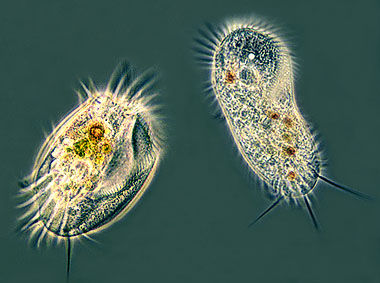
As the level of oxygen in the atmosphere rose, however, most
surface lifeforms on Earth became oxygen breathing, such as
these two single-celled
protoctists
(Euplotes, left, and Stylonychia)
which move with hairlike cilia.
Some of the oxygen produced by photosynthetic bacteria was absorbed (oxidized) by iron dissolved in Earth's oceans. This produced an ancient rain of minute, rusty particles to accumulate on ancient ocean floors that is found today as bands of haematite in rock. As molecular oxygen became abundant, a fraction underwent continuous conversion into a tri-atomic form known as ozone (O3). The ozone rose to form a layer in Earth's atmosphere which helps to protect the planet's carbon-based lifeforms from damage by the Sun's ultraviolet radiation. As photosynthetic bacteria prospered and spread, the concentration of oxygen in air and water became abundant as early as Year 2.24 billion (see update from Bekker et al, 2004). However, anaerobic microbes in many habitats died out in massive numbers, including the climate-warming methanogens, during the "Great Oxygenation Event" (or "Great Oxidation Event") between Years 2.2 and 2.3 billion.
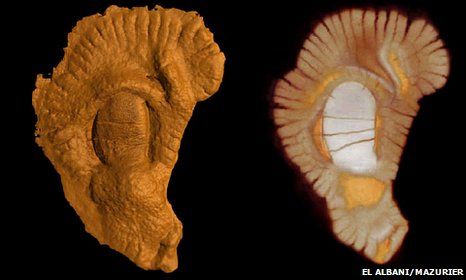
 Abderrazak El Albani,
Arnaud
Mazurier,
Abderrazak El Albani,
Arnaud
Mazurier,
and
El
Albani et al, 2010
Larger and
alternative images.
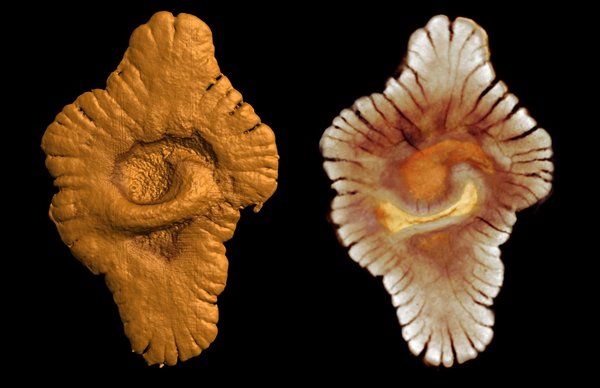
On oxygenated seafloors, the first
multi-cellular lifeform (possibly
an eukaryotic
alga)
appears to
have evolved by Year 2.4 billion
as the 12-centimeter or 4.7-inch
protoctist,
Grypania
(more from
BBC
News and
New
Scientist).
Earth's primeval atmosphere was also rich in carbon dioxide as well as methane, perhaps 100 times as rich as today. As the Sol was as much as 20 percent less luminous then, this primeval abundance of carbon dioxide and methane initially kept the young cooling Earth warm through a greenhouse effect. For 250 million years between Year 2.16 and 2.26 billion, however, volcanic activity appears to have subsided in a "global magmatic lull" so that comparatively little carbon dioxide was released into the atmosphere through volcanoes (Condie et al, 2009; and David Shiga, New Scientist, May 9, 2009). Along with weather and geologic processes on Earth removed carbon dioxide from the atmosphere, the expanding success of photosynthetic microbes eventually created so much atmospheric oxygen and depleted methane and carbon dioxide levels to such an extent that the greenhouse effect may have become negligible around Year 2.1 billion, chilling the young Earth (Gabrielle Walker, New Scientist, 1999); and Evans and Kirschvink, 1997).
 Unknown artist, ESO
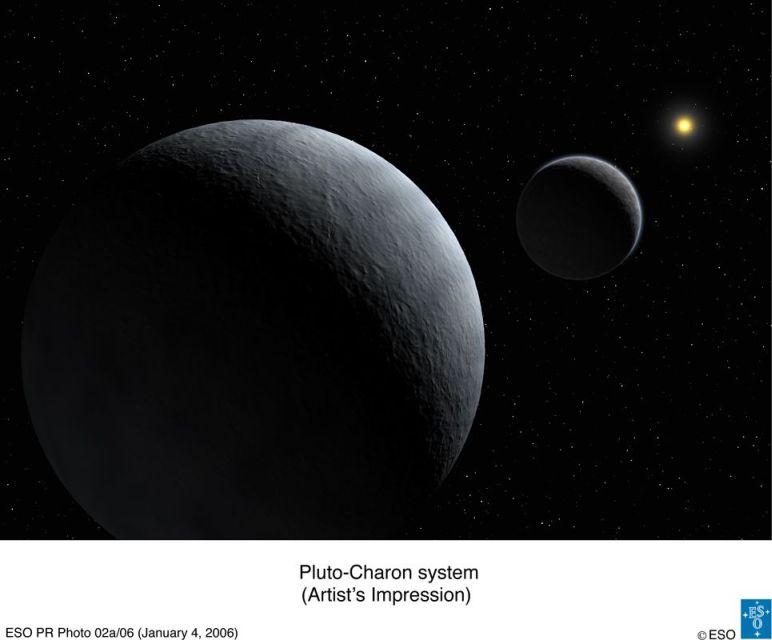
Larger illustration of
Pluto and Charon.
Earth's surface may have froze
mostly or thinly solid through
equatorial regions (see debate
between the "Snowball"
versus
"Slushball"
Earth hypotheses).
As a result, the Earth's surface may have froze mostly or thinly solid through equatorial regions ("Snowball" versus "Slushball" Earth hypotheses). This chill may have lasted until the level of atmospheric carbon dioxide gradually rose to 350 times today's concentration after millions of years of volcanic activity (with a similar increase in methane) and a sudden meltdown occurred -- resulting in an "Acidic Hothouse" (2005 update. Microbial life, however, should have survived in or around cracks in warm ocean seafloors, deep volcanic vents, surface volcanic springs, and other warm niches. A Snowball to Acidic Hothouse swing would have greatly added to already high evolutionary pressures from anaerobic extinctions through genetic isolation of selective survival adaptations and may have led singled-celled eukaryotic organisms to cooperate together physically and form the first multi-cellular lifeforms.
 David Patterson,
Linda Amaral Zettler,
Virginia Edgcomb
Larger image of
sulfur bacteria.
Sulfur washed from the land
to the sea apparently created
more than a billion years of
anoxic oceans -- stinking of
sewer gas -- that was toxic
to oxygen-loving life
(more).
After each great thaw, there may have been a "huge transient bloom of cyanobacteria that quickly died and rotted, in the process consuming all the oxygen they had once produced (Nick Lane, New Scientist, February 10, 2010). Although atmospheric oxygen soon recovered again as photosynthesis and weathering reached a new balance, at about 10 per cent of present-day levels, the oxidative weathering of sulphides on land filled the oceans with sulphate which created abundant food for a group of bacteria that filled the oceans with sewer gas (hydrogen sulphide) toxic to oxygen-loving lifeforms (delaying the development of eukaryotic plants and animals) and turned them "into stinking, stagnant waters almost entirely devoid of oxygen." Mild oxygen levels in shallow seas but oxygen-poor deep oceans lasted for some 1.3 billion years during a time that has been dubbed the "Boring Billion" but eventually led to the development of mitochondria that now power multicellular planet and animal life (Nick Lane, New Scientist, February 10, 2010; Rachel Ehrenberg, Science News, September 29, 2009; Johnston et al, 2009; and H.D. Holland, 2006). Eventually, however, terrestrial red and green algae and the first lichens developed on land and the final big rise in oxygen may have been caused by the "greening of the continents from around 800 million years ago," when these simple early lifeforms on land steadily spread and broke down rocks that sustained a higher rate of erosion and led to the release of more nutrients into the oceans that stimulated even more photosynthesis by more newly evolved algae as well as older cyanobacteria (Nick Lane, New Scientist, February 10, 2010).
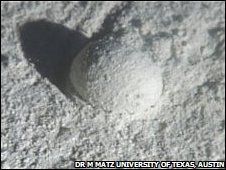
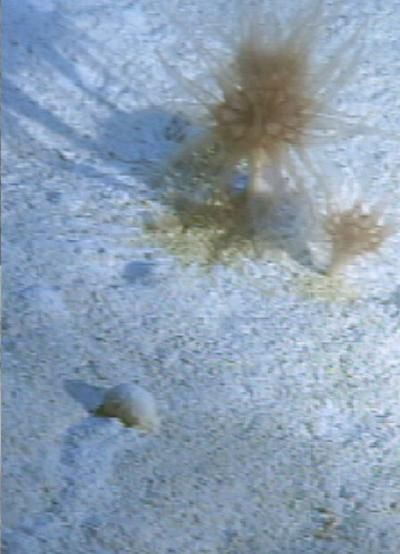
 Courtesy of
Mikhail V. Matz,
University of Texas at Austin
Courtesy of
Mikhail V. Matz,
University of Texas at Austin
Larger,
silt-covered, and
moving images.
Giant deepsea protists (like grape-sized, single-celled amoeboid
Gromia sphaerica) may have developed more than 1.8 billion years
ago, and possible fossilized tracks from slow
rolling around warm
seafloors with
pseudopodia have been dated to 1.2 billion ago
(more) .
Years 2.6 to 3.6 Billion
According to the fossil record, the first multi-cellular lifeforms (e.g., fungi, plants, and many plant- and animal-like protoctists) evolved during this period, possibly along with giant single-celled but amoeboid protists (like grape-sized Gromia sphaerica). Multi-cellularity allowed fungi and plants to grow larger than their microbial ancestors. With the exception of the larger true Algae (seaweeds and kelp), however, most protoctists that persisted to modern times have remained microscopic in size. In May 2009, scientists announced the discovery of fossil evidence in the Mackenzie Mountains of Canada's Northwestern Territory of sponge-like animals that looked like ""blobs of gelatinous goo" and that lived on reefs towards the end of this period, around 850 million years ago, which supports molecular clock models of genetic evolution and divergence (Jeff Hecht, New Scientist, May 11, 2009). Supporting the rise in multi-cellular life, particularly those developing into animals which are unable to produce the oxygen that they need to respire, was a further rise in oxygen levels around 1.2 billion years ago that apparently allowed the gas to permeate into lake waters and their sediment beds, which apparently also supported non-photosynthetic sulphide-oxidating bacteria that left chemical traces from this era (Jonathan Amos, BBC, November 12, 2010; and Parnell et al, 2010). By the end of this period (around 1.0 to 1.2 billion years ago), multi-cellular life apparently colonized aquatic environments on land by leaving fossilized evidence in freshwater lake sediments across northwestern Scotland (Strother et al, 2011; and Colin Barras, New Scientist, April 13, 2011).
© Mike Guiry. Courtesy of the Irish
Seaweed Industry Organisation
(Fucus serratus, or "Serrated Wrack," a large multi-cellular protoctist)
Years 3.6 to 4.1 Billion
Earth may have entered a cycle of "Snowball" to "Acidic Hothouse" swings between Years 3.85 and 4.02 billion. This may have occurred because the continents were clustered around the equator, and so a warm Earth would be much more vulnerable to slight cooling trends that trigger a Snowball period. It was not until tectonic movements dispersed the continents north and south that the safety valve provided by chemical weathering kicked back in to restore greater stability. The melting of Snowball Earth glaciers apparently released phosphates ground off continental rocks into the oceans between 750 and 620 million years ago, causing levels of this vital nutrient to rise to levels higher than experienced before or since, and feeding oxygen-producing life which eventually supported the rise of newly developing oxygen-consuming "metazoans," or animals (staff, New Scientist, October 27, 2010; and Planavsky et al, 2010). (See a map of the Earth as it looked towards the end of this period about 650 million years ago, when the climate was more like as it is today with mountain glaciers and polar ice. More maps and information can be found at Christopher R. Scotese's PALEOMAP Project.)
 Courtesy of
Maloof
et al, 2010; and
Situ Studio
Courtesy of
Maloof
et al, 2010; and
Situ Studio
Larger,
jumbo, and
composite images.
Reconstruction of a fossilized, sponge-like animal found in a
650-million-year-old
stromatolite
(bacterial-mat structure) from
the remains of ancient ocean reefs in Trezona Bore, West
Central Flinders, South Australia
(more).
Traces of sponge-like
animals also have been found in 850-million-year-old rocks
(more).
Again, after a massive extinction, intense evolutionary pressure through genetic isolation and selective adaptation may have resulted in a burst of multi-cellular evolution and diversity, leading to the first multi-cellular "animals." Lacking a backbone, these creatures were "invertebrates." Including sponge-like animals (850 to 635 million years ago, which pre-date the end of the hypothesized Snowball-Earth-type Marinoan glaciation -- 2010 discussion at: Maloof et al, 2010; NSF press release; Hillary Parker, News at Princeton, 2010; and James O'Donoghue, New Scientist, August 17, 2010), worms, molluscs, and arthropods (joint-footed animals), invertebrates are among the most successful animals today.
 Courtesy of
David
Bottjer, Jun-Yuan Chen,
NIGP/AS
Courtesy of
David
Bottjer, Jun-Yuan Chen,
NIGP/AS
Larger cross-sectional image (or
3-D
illustration by
Amadeo Bachar).
600-million-year-old microscopic fossil of a bilateral animal,
Vernanimalcula
("small spring animal"), resembling a flatworm, which evolved after the long
winter of Snowball Earth (more from
USC News and
New
Scientist).
Near the end of this period around 575 million years ago, sediments rich in minerals essential to Earth life (including phosphate, iron, calcium, and bicarbonate ions) may have eroded and washed down from a great range of mountains around the equator -- the Transgondwanan Supermountain -- that was created on the supercontinent Gondwana by the collision of three large continental blocks (Arabia, India, and Antarctica) with the eastern edge of Africa. In combination with rising oxygen levels (and possibly other factors), the increased availability of vital nutrients in the surrounding seas may have kick-started the development of multi-celled Ediacaran fauna, according to Rick Squires' research group. A subsequent collision between Antarctica and Africa raised more mountains and released more sediment from 530 to 510 million years ago may have led to the Cambrian Explosion, when most major groups of animals evolved (including trilobites and bivalves which used abundant calcium to build protective carbonate shells).
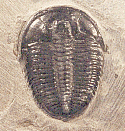
Utah Geological Survey,
Millard
County, Utah
570-million-year-old
Trilobite,
an extinct marine arthropod.
Years 4.1 to 4.6 Billion
Although the Cambrian explosion generated a large number of new phyla of Earth-type life, it actually crashed in a mass extinction not long after it began when oxygen levels fell and hydrogen sulphide levels rose again so that biodiversity at the family, genus, and species levels was decreasing around 515 million years ago (Gill et al, 2011; and Michael Marshall, New Scientist, January 5, 2011). About 489 million years ago, however, the Ordovician Biodiversification Event began with a second explosion of new life forms. This period was apparently associated with increased meteoric impacts (around 100 times more frequent than today) associated with the break-up in the Main Asteroid Belt of the L-chondrite parent body -- the largest documented asteroid breakup event over the past few billion years. There was a warm, stable climate with dispersed continents surounded by vast warm and shallow seas over continental shelves that provided light, oxygen, and nutrients for life to thrive in, because intense mountain-building also increased erosion and the discharge of eroded nutrients into those seas. In addition, there was intense volcanic activity that generated even more nutrients and yet helped to create more local environments for the evolution of biodiversity (James O'Donoghue, New Scientist, June 11, 2008).
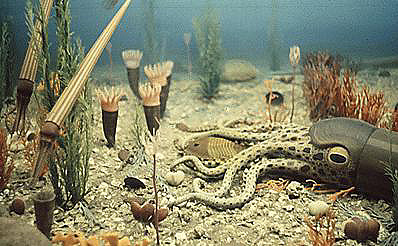 Unknown artist,
Remote
Sensing Tutorial,
GSFC,
NASA
Marine inverterbrate life in the late
(or "Upper")
Ordovician,
after the
first vertebrate fishes had evolved.
Life underwent a second explosion
of diversity during the
Ordovician
Period, whose diversity and complexity
persisted through a mass extinction
around 443 million years ago
(more).
During the Ordovician Period, life also moved onto land. After over three billion years of evolution in the oceans, multi-cellular life -- beginning with green algae, fungi, and plants (liverworts, mosses, ferns, then vascular and flowering plants) -- began adapting to land habitats by creating a new "hypersea," and adding anomalous shades of green to Earth's coloration more than 472 million years ago (Matt Walker, BBC News, October 12, 2010; and Qiu et al, 1998 -- more on the evolution of photosynthetic life and plants on Earth). Exploiting habitats that are often or mostly out of water required new symbiotic relationships to contain and move water, including the fusion of some fungi and algae to create lichen in communities with bacteria that survive extreme desiccation on land while breaking down rock into soil, and the association of mycorrhizae fungi and the root tissue of new vascular plants -- culminating in trees that pump water high into the air -- to exchange mineral nutrients (e.g., phosphorus) and usable "fixed" nitrogen from the atmosphere for photosynthetic products. Soon, plant-eating animal life followed (including Arthropods such as the scorpion-like Eurypterids that moved from marine waters into brackish then fresh water -- some species becoming amphibious and emerging onto land for part of their life cycle after becoming capable of breathing in both water and air -- which eventually evolved into insects, and finally, by 379 million years ago, animals with backbones known as "vertebrates" which evolved from Fishes that moved onto land to evolve into Amphibians and eventually into Reptiles, Dinosaurs, Birds, and Mammals -- Niedzwiedzki et al, 2010). Today, some scientists estimate that the biomass of all forms of life that has become successfully adapted to habitats on land has become hundreds to thousands of times greater than that of life in the seas.
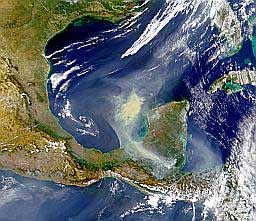
NASA
(Yucatan
Peninsula and Gulf of Mexico)
Although major impactors have become comparatively rare occurrences during the past 500 million years, the extinction of the Dinosaurs may have been assisted by a large asteroidal or cometary impact about 65 million years ago centered near Puerto Chicxulub, at the tip of Mexico's Yucatan Peninsula. The demise of the Dinosaurs created ecological conditions which eventually fostered the development of modern Humans (as Homo sapiens sapiens) only around 130,000 years ago. Bacteria, however, have remained Earth's most successful form of life -- found miles deep below as well as within and on surface rock, within and beneath the oceans and polar ice, floating in the air, and within as well as on Homo sapiens sapiens; and some Arctic thermophiles apparently even have life-cycle hibernation periods of up to a 100 million years while waiting for warmer conditions underneath increasing layers of sea sediments (Lewis Dartnell, New Scientist, September 20, 2010; and Hubert et al, 2010).

C. Mayhew and R. Simmon -
NASA/GSFC,
NOAA/
NGDC,
DMSP
Digital Archive
(larger and
jumbo composite images; see also
Astronomy
Picture of the Day)
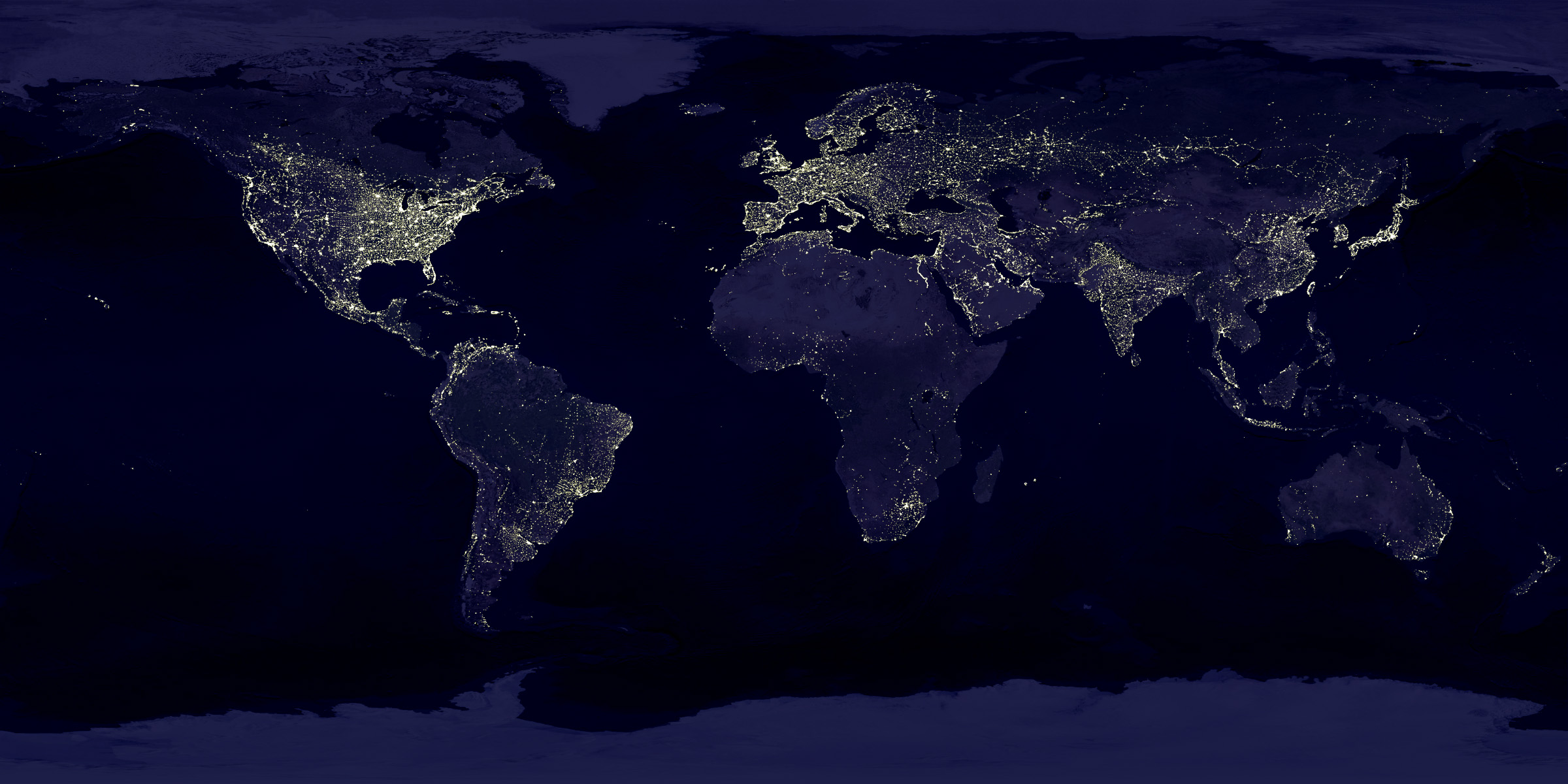
The presence of Homo sapiens sapiens is evident from night-time
observations of Earth's surface.
Life on Earth Today
The diversity of carbon-based organisms on Earth, their biological history as well as physical and genetic characteristics, can be presented as an "evolutionary tree" (as at the University of Arizona's Tree of Life Project), whose trunk extends back to the Last Common Universal Ancestor (LUCA), or even further back to the Initial Darwinian Ancestor (IDA). In recent decades, however, there has been much controversy about the branches of life extending back to Bacteria. One view of the Phylogeny of Life on Earth (at the University of California at Berkeley's Museum of Paleontology) highlights the role of archeabacteria among prokaryotes -- as a separate "Archaea domain" apart from Eubacteria -- in the development of cellular life with nuclei (eukaryotes). This narrow view has been becoming overshadowed by genetic findings that support the more recent hypothesis of complex roots, which emphasizes lateral genetic exchanges or horizontal gene transfers (HGT) rather than vertical mutational progression in the development of nucleated organisms, through a clearly defined "tree of life" (Mark Buchanan, New Scientist, January 26, 2010). By late 2008, empirical research indicated that HGT may account for as much as 80 percent of over half a million genes in 181 prokaryotes examined, possibly a similar proportion of unicellar eukaryotes, and around 14 per cent of living plant species are the product of the fusion ("hybridization") of two separate lineages, as well as a significant driver of in animal evolution, even of ancient proto-humans through the mediation of viruses (Graham Lawton, New Scientist, January 21, 2008). In addition, recent findings about large DNA viruses have led to hypotheses about the role of RNA and DNA viruses as precursors to single-celled microbes with and without nuclei, and giant viruses as the descendants of eukaryotes through reductive evolution (Charles Siebert, Discover, March 2006; and GiantVirus.org).
Initial Darwinian Ancestor (IDA)
Last Universal Common Ancestor (LUCA)
Viruses (precursors or as descendants of reductive evolution?*)
Eukarya (nucleated organisms resulting from symbiogenesis)
Planetary Impact of Life
All the millions of lifeforms on Earth seek energy and food while generating waste heat and materials. Consequently, massive amounts of reactive gases such as oxygen, hydrogen, and methane are continually being added to Earth's now "anomalous" atmosphere faster than they would otherwise be removed by inorganic chemical processes. Paradoxically, as Sol has become perhaps a third brighter over the past four billion years since life developed on Earth, geologic evidence suggests that the planet has gotten cooler through life-induced reductions in the amount of greenhouse gases in the atmosphere.
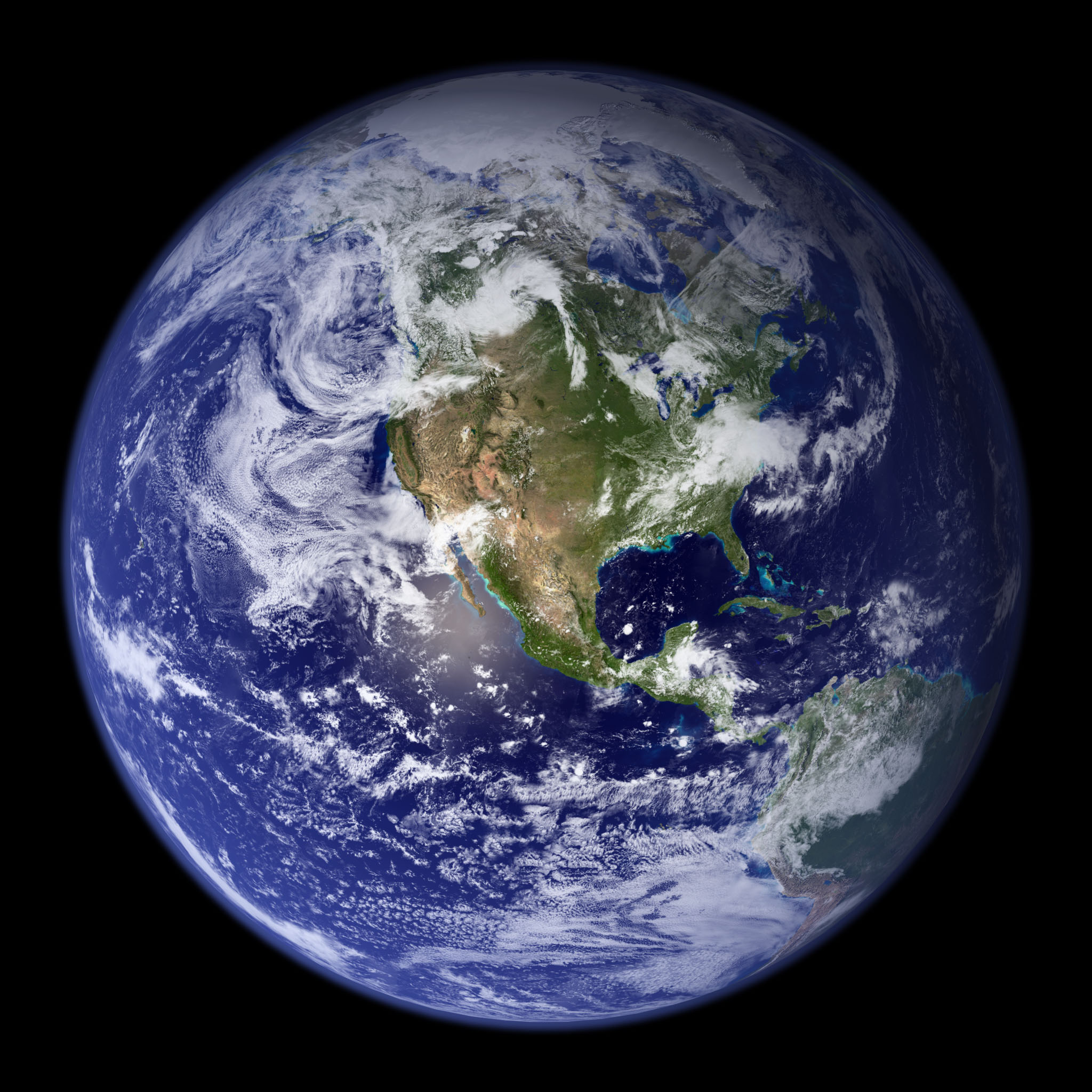
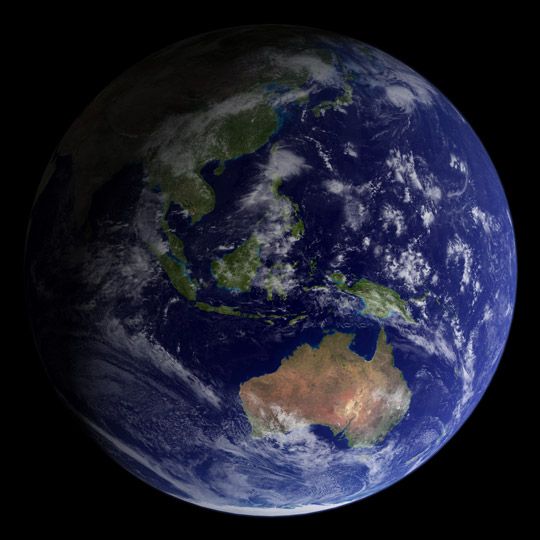
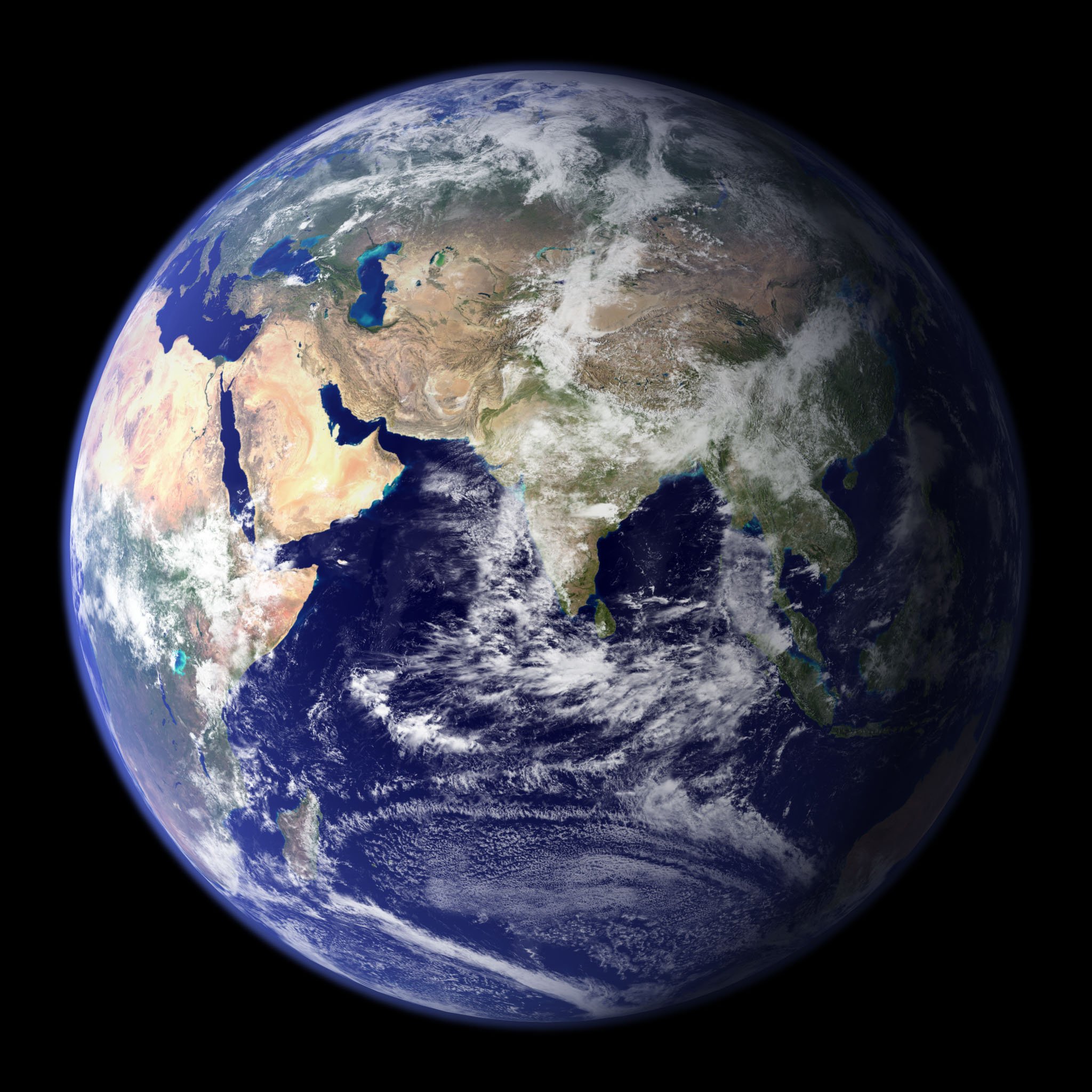
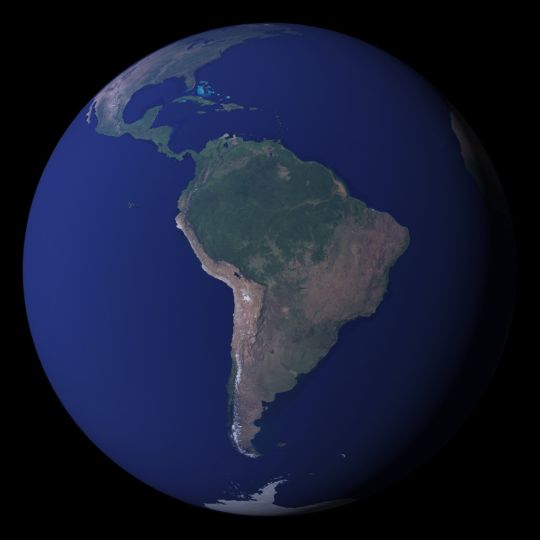
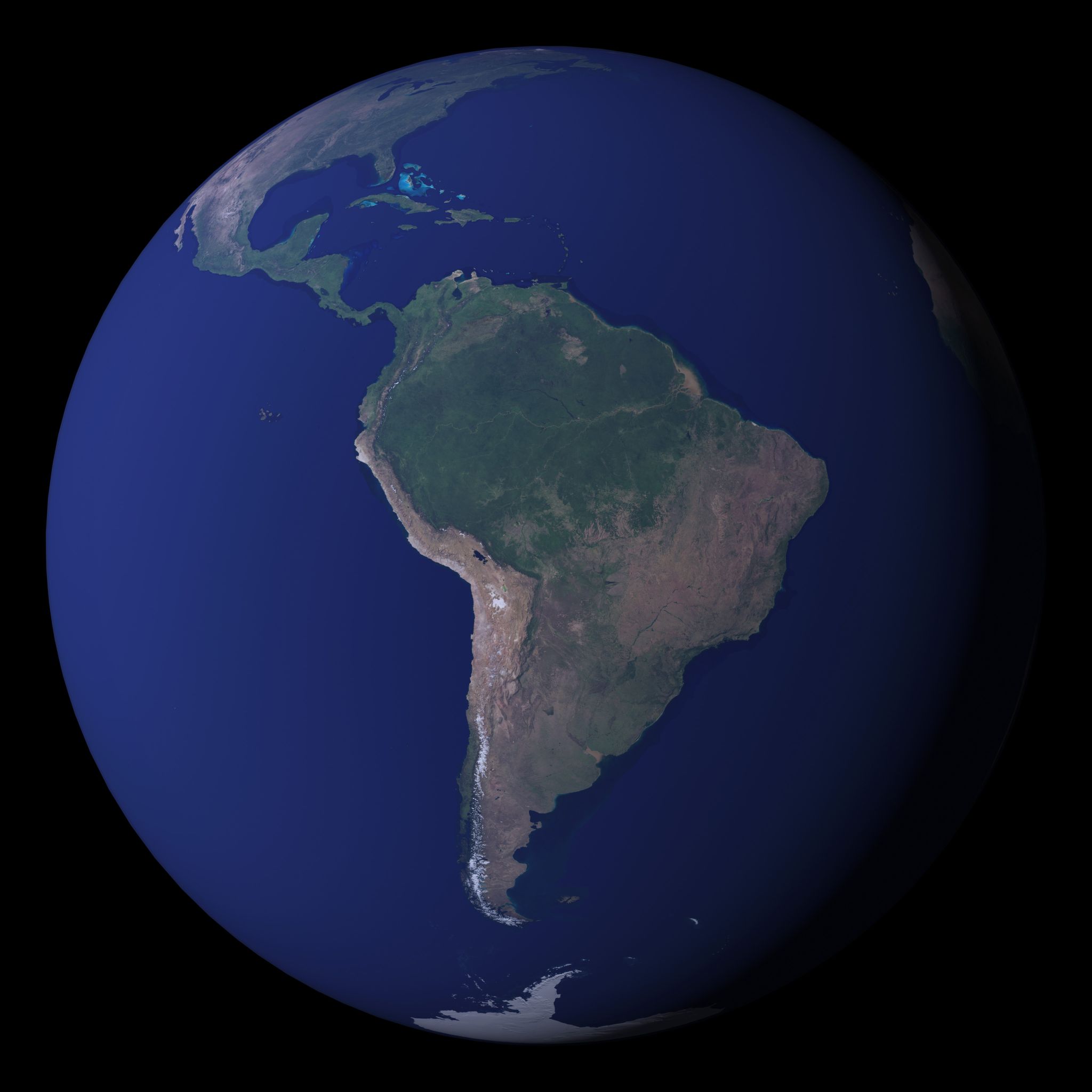
NASA (Earth
Observatory) -- larger and
jumbo images;
Asia-Africa (jumbo) and
Western Pacific
(jumbo); and
cloudless
Africa-Eurasia (jumbo)
and Southern Americas (jumbo)
There is still great debate over the extent to which non-intelligent life on Earth is able to adjust planetary conditions to promote its continued survival and, indeed, prosperity -- debate between a weak and a strong "Gaia hypothesis." What is known is that, as each species competes with other species, it also cooperates with some others, if only by fortuitous accidents. On the other hand, populations of newly evolved species successful enough to grow and expand rapidly must eventually crash or slow down, as any species uses up available resources and interact with others that seek to take advantage of their increased numbers through predation or parasitism instead of symbiosis. As a result, life on Earth has flourished for over four billion years by recycling its own wastes and exploiting new habitats with physiological adaptations, through occasional environmental disasters such as catastrophic meteoric impacts. Now, it remains to be seen whether the rise of cultural intelligence can be exploited effectively by the Human species to prosper for a significant geologic stretch of time, as has been already achieved by non-intelligent lifeforms.
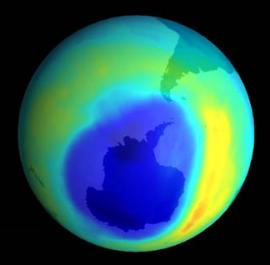
NASA (Total
Ozone Mapping Spectrometer (TOMS) --
more
images)
Mostly Human-made, record-sized
ozone
hole over Antarctica on
September
9-10, 2000 allowed intense ultraviolet radiation to damage
tissues and DNA of surface lifeforms on land and in water,
leading to severe sunburns, blindness, skin cancers, and death.
For the first time, the hole extended over a major Human population
-- the 120,000 residents of
Punta
Arenas, a city in southern Chile.
© 1998-2013 Sol Company. All Rights Reserved.
|